The postpartum period is often described as the “fourth trimester”, a transformative bridge between pregnancy and a return to functional wellness. Yet, for many, this phase is shrouded in a “wait and see” approach. Postpartum recovery involves far more than the standard six-week medical checkup; it is a complex, gradual process of tissue healing, neurological recalibration, and rebuilding strength while navigating the relentless physical demands of caring for a newborn.
Many parents are surprised to learn that lingering discomfort, instability, or weird sensations in the body are common, but they are frequently underserved by traditional postnatal advice. Without specific guidance, symptoms like chronic back pain, pelvic floor dysfunction, and core weakness can persist for years, long after the nursery has been outgrown. At Coven Health Collective in Calgary, we believe that postpartum physiotherapy should be the standard of care, moving you beyond simply “getting by” to feeling empowered and confident in your body once again.
Here are five fundamental truths every new parent and birth parent should know about the recovery journey.
What is postpartum recovery?
Postpartum recovery is the process of healing and rebuilding after pregnancy and birth. It includes your pelvic floor, abdominal wall, and overall strength, as well as how your body manages pressure, movement, and daily activity.
The first few months after birth are often referred to as the “fourth trimester.” But postpartum recovery doesn’t stop there. It’s a messy, ongoing transition that involves tissue healing, neurological recalibration, and rebuilding strength while navigating the physical demands of caring for a newborn. So why do we expect it to be wrapped up neatly at a six week checkup?
Graduating out of “postpartum recovery” isn’t something that can be defined by a single appointment or reduced to a quick green light to return to exercise or intercourse… especially when that clearance often isn’t based on a thorough physical assessment. This gap in care leaves many people navigating recovery without a clear understanding of how their body is actually functioning. In reality, postpartum recovery is a longer, more gradual process of healing, rebuilding strength, and figuring out how your body works now, all while keeping a small human alive on very little sleep.
At Coven Health Collective in Calgary, we believe that postpartum physiotherapy should be the standard of care, moving you beyond simply “getting by” to feeling empowered and confident in your body. And that starts with a better understanding of what’s actually going on. Here are five things we want every postpartum client to understand.
1. Your Pelvic Floor Has Been Through a Major Mechanical Event
Why Pelvic Health Recovery is Essential
The pelvic floor is a sophisticated hammock of muscles that supports your bladder, bowel, and uterus. During pregnancy, these muscles adapt to an increasing change in load (which makes sense after supporting the weight of a growing human for months), leading to significant changes in muscle tone and coordination. Regardless of whether you’ve had a vaginal or cesarean delivery, these muscles are then subjected to significant mechanical impact and/or surgical recovery.
Both vaginal and cesarean births impact the pelvic floor. They just do it differently, but both can result in common postpartum symptoms, including:
- Stress Incontinence: Leaking when coughing, sneezing, laughing, or jumping.
- Pelvic Heaviness: A sensation of pressure or a “bulge” in the vaginal area.
- Dyspareunia: Discomfort or pain during intimacy.
- Urgency: A frequent, sudden, or uncontrollable need to use the bathroom.
While these symptoms are common, they are not normal. They are signs that your pelvic floor is struggling to manage internal pressure. Postpartum physiotherapy focuses on restoring this coordination through specialized retraining, breathing techniques, and pressure management education, ensuring your pelvic floor works in harmony with the rest of your body.
2. Your Core Is a Functional System, Not Just a Set of “Abs”
Redefining Deep Core Recovery
Pregnancy causes the abdominal wall to expand, which leads to diastasis recti (or DRA, or diastasis rectus abdominis), a natural softening of the connective tissue that lies between the rectus abdominis muscles. Focusing solely on “closing the gap” is a narrow view of recovery. Your core is a 360-degree pressure-management system consisting of the diaphragm, the deep abdominal muscles (transverse abdominis), the pelvic floor, and the stabilizing muscles of the spine.
The Risk of Rushing the Process
This is where we see people run into issues. They are cleared to return to exercise by their primary care provider, but have no clear understanding of how to manage load or pressure through the system. Would you try to go through ACL surgery without a professional’s rehab plan? Then you probably shouldn’t do it postpartum.
One of the most frequent setbacks we see is the “too much, too soon” approach. Jumping straight back into high-intensity interval training (HIIT), heavy lifting, or your “normal” workouts can overwhelm healing connective tissues. If the deep core cannot manage the load, that pressure often travels downward to the pelvic floor or backward into the spine, leading to injury.
Recovery at Coven Health Collective focuses on a systematic rebuild of the whole system:
- Neuromuscular Reconnection: Learning to feel the core engage without holding your breath or compensating with other muscle groups.
- Pressure Management: Ensuring you can lift your baby, a grocery bag, or your loaded deadlift without over straining certain muscle groups and/or causing injury.
- Progressive Overload: Gradually increasing resistance to ensure long-term stability and power.
3. Persistent Pain is a Signal, Not a Requirement of Parenthood
The Physical Toll of Caregiving
Caring for a newborn places a constant physical demand on your body. Between lifting, feeding, carrying, and repetitive tasks like nursing, rocking, and hauling car seats, your body is under continuous mechanical stress, often on minimal sleep. And yet, postpartum pain is still commonly dismissed as “just part of being a parent.”
Common pain patterns include:
- “Mommy Wrist” (De Quervain’s Tenosynovitis): Pain at the base of the thumb from lifting.
- Upper Back and Neck Tension: Often driven by breastfeeding or bottle-feeding postures.
- Pelvic Girdle and Hip Pain: Lingering instability from pregnancy-related hormonal changes.
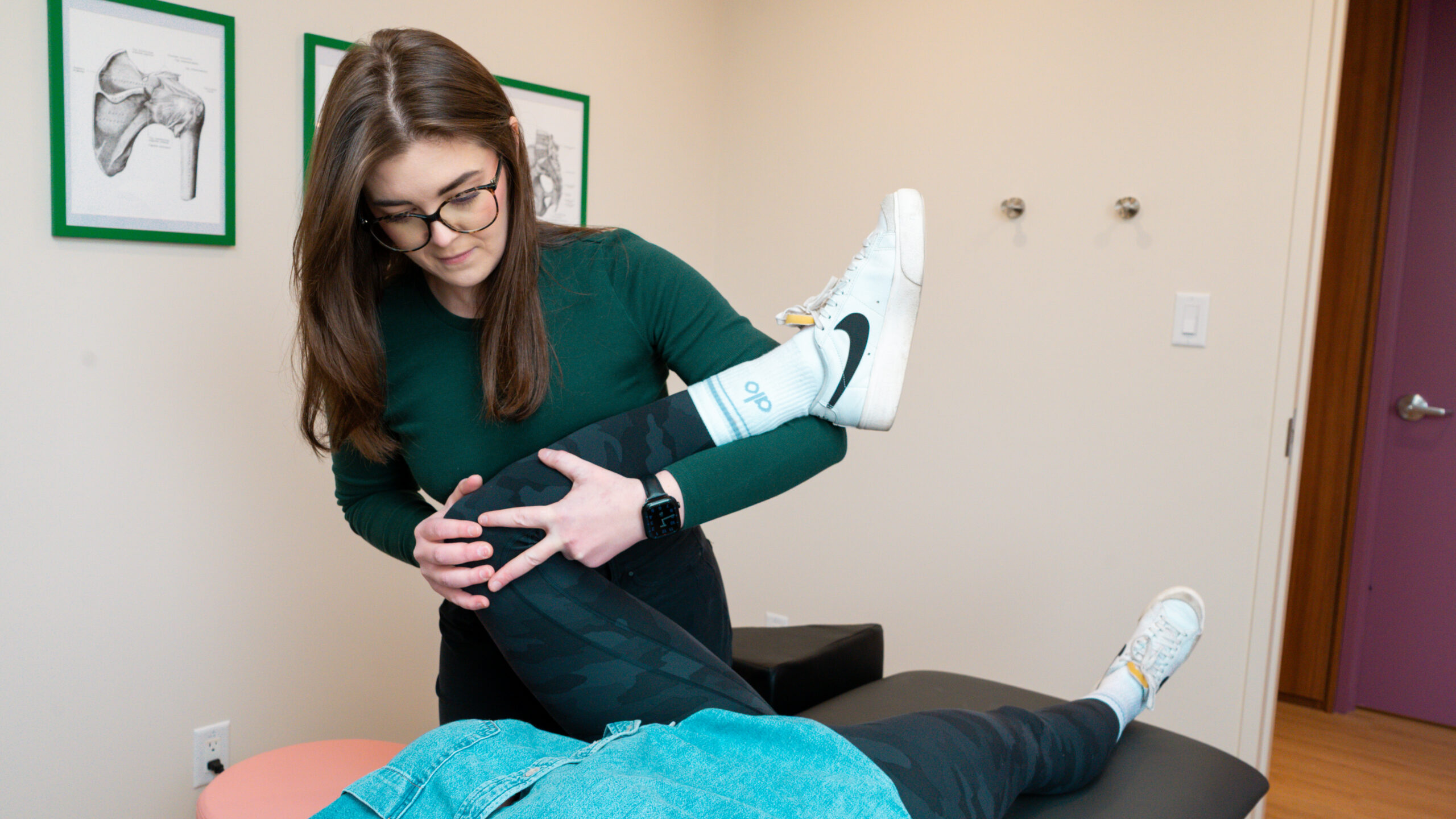
Physiotherapy serves as a diagnostic tool to identify the root cause of these aches. By adjusting your ergonomics and strengthening the specific muscles required for these daily tasks, we can turn down the volume on your pain signals and make caregiving feel physically sustainable.
4. Rest is Vital, But It Isn’t a Complete Rehabilitation Plan
The Movement Paradox
While the initial weeks postpartum require significant rest to allow for primary tissue healing, prolonged inactivity can actually hinder recovery. Tissues require mechanical loading to heal properly, meaning they need gentle, controlled stress to regain their strength and elasticity.
A modern postpartum rehab plan moves beyond passive rest to include:
- Gentle Mobility: Restoring the ribcage expansion and spinal rotation lost during the third trimester.
- Active Recovery: Using walking and light movement to regulate the nervous system and improve circulation.
- Functional Strengthening: Preparing your body for the “sport” of parenting, which involves constant squatting, lifting, and carrying.
Rest allows the body to stop bleeding and close wounds; targeted movement allows the body to thrive. A lot of people are told to rest, and then later told to “get back to it,” without much guidance in between. That gap is where people often feel stuck or unsure of what to do next. At Coven Health Collective, we’re not about “bouncing back”. We provide a clear, step-by-step approach to recovery, so you are not left guessing what comes next. The goal is to support what your body needs right now, while building toward the strength and capacity required for the things you want to get back to later.
5. You Don’t Need to Wait to Seek Help
The Case for Preventative Postpartum Care
Patients often wait until suffering from significant leaking or pain before seeking intervention.
But by that point, you are already reacting to a problem rather than preventing one. You do not need a reason or a “problem” to book a postpartum assessment.
This is another place where gaps in care show up. Postpartum recovery is often treated as something you check in on once, rather than something that is monitored and supported as you return to higher levels of activity.
A postpartum assessment is not just for when something feels off. An assessment (usually around 6 weeks, though earlier for certain concerns) allows us to:
- Baseline Your Mechanics: See how your body is currently moving and where compensations have formed.
- Screen for Issues: Identify early signs of prolapse or diastasis recti before they become symptomatic.
- Create a Roadmap: Provide a clear, evidence-based plan for returning to the sports or activities you love, such as running, lifting, or yoga.
This is not about looking for problems. It is about having the information you need to move forward with more clarity, and to give you the information, support, and plan you need to move forward with confidence.
When Should You Book an Assessment in Calgary?
Postpartum recovery does not follow a strict timeline, and is a deeply personal journey. There is no single “right” time to seek support. Whether you are six weeks or six years postpartum, your body is still capable of change.
You should consider booking a session at Coven Health Collective if you:
- Feel a heaviness or lack of support in your pelvic region.
- Notice your stomach “doming” or “coning” during movement.
- Experience any amount of leaking when you laugh, run, or lift.
- Are fearful of returning to the gym because you don’t trust your body.
- Simply want a professional to help you navigate the transition from parent back to athlete or active individual.
Your Recovery, Your Pace
Postpartum healing is not a race to bounce back to a pre-pregnancy version of yourself.
Your body has changed, and your capacity will rebuild over time. That process is not linear, and it does not follow a fixed timeline.
A good postpartum recovery plan is about understanding where your body is now, supporting what it needs, and gradually building toward the things you want to return to, whether that is exercise, work demands, or simply feeling more comfortable day to day.
At Coven Health Collective in Calgary, we provide safe, inclusive, experienced, and evidence-based care that focuses on giving you clear information, practical tools, and a plan that reflects your body, your experience, and your goals. With the right support, you can move forward with confidence, strength, and a body that feels more like your own again.