
Leaking when you laugh. A constant “just in case” need to pee. Pressure in the pelvis. Pain with sex. A core that never quite feels connected no matter how many exercises you try.
These symptoms are incredibly common, but they’re also things a lot of people assume they just have to live with, especially after pregnancy, with aging, or during exercise.
You don’t.
At Coven Health Collective in Calgary, we work with people experiencing pelvic floor dysfunction every day. And while social media has made pelvic health a more common conversation, there’s still a huge gap between “I’ve heard of the pelvic floor” and actually understanding what’s going on in your body.
So let’s talk about some of the signs your pelvic floor may need support.
First: What Even Is the Pelvic Floor?
Your pelvic floor is a group of muscles and connective tissues that sit at the base of your pelvis. It helps support your pelvic organs, contributes to bladder and bowel control, responds to pressure during movement and exercise, and plays a role in breathing, core function, and sexual health.
Importantly: pelvic floor issues are not always caused by weakness.
Sometimes the muscles are underactive. Sometimes they’re overworking. Sometimes they’re tense, guarded, poorly coordinated, or struggling to respond well to pressure and movement demands. That’s why pelvic floor rehab is rarely as simple as “just strengthen it” or “just do Kegels.”! Different symptoms can come from very different underlying patterns, which is why assessments and individualized treatments always matter.
10 Signs of Pelvic Floor Dysfunction
Because pelvic floor dysfunction can show up in so many different ways, a lot of people don’t realize their symptoms may actually be connected to the pelvic floor at all. So here are some of the common ways we see pelvic floor issues show up in day-to-day life:
1. Urinary leakage when you laugh, sneeze, cough, or exercise
Leaking during a run, a jump, or a really good laugh is called stress incontinence and it’s highly treatable. You don’t have to plan your life around it.
2. Feeling like you always need to have a bathroom nearby
Feeling like you always need a bathroom nearby even when your bladder isn’t full can signal coordination issues between the bladder and pelvic floor.
3. Difficulty fully emptying your bladder
Pelvic floor dysfunction can also make it hard to pee. You might find yourself straining to start urine flow, feeling like you didn’t fully empty, or needing to go again soon after. This often points to pelvic floor tension rather than weakness.
4. Heaviness or pressure in your pelvis
A dragging sensation, a feeling that something is ‘falling,’ or pelvic heaviness after long days or prolonged standing is a sign your pelvic floor is asking for support. There are a few different things that can cause this, and a pelvic floor physio can help you figure out what’s going on.
5. Pain or discomfort during or after sex
Tight or uncoordinated pelvic floor muscles are a surprisingly common cause of pain during intimacy. This is both more common and more treatable than most people realize.
6. Persistent low back, hip, or tailbone pain
Your pelvic floor doesn’t work in isolation. It’s in constant conversation with your diaphragm, deep abdominals, and back muscles. When the pelvic floor is struggling, other areas compensate, often showing up as nagging back pain, hip discomfort, or tailbone pain when sitting.
7. Constipation or straining with bowel movements
Healthy bowel movements rely on pelvic floor coordination. Difficulty going, frequent straining, or feeling “blocked” can all be signs that something’s off!
8. A core that just won’t connect
If core work has never really clicked for you, or you notice belly pressure and bulging during exercise, your pelvic floor may be the missing link. Not your effort level.
9. Postpartum symptoms that never fully resolved
After pregnancy, your body deserves real support, not just time. Persistent leaking, heaviness, pain, or core weakness months or years postpartum are signs that proper rehab is still on the table and absolutely worth pursuing.
10. Avoiding movement because of leaking or pressure
Exercise should feel empowering, not anxiety inducing! If you’re skipping runs, jumping jacks, or lifting because you’re worried about leaking or pressure, that’s your pelvic floor asking for help.
What Pelvic Floor Physiotherapy Actually Looks Like
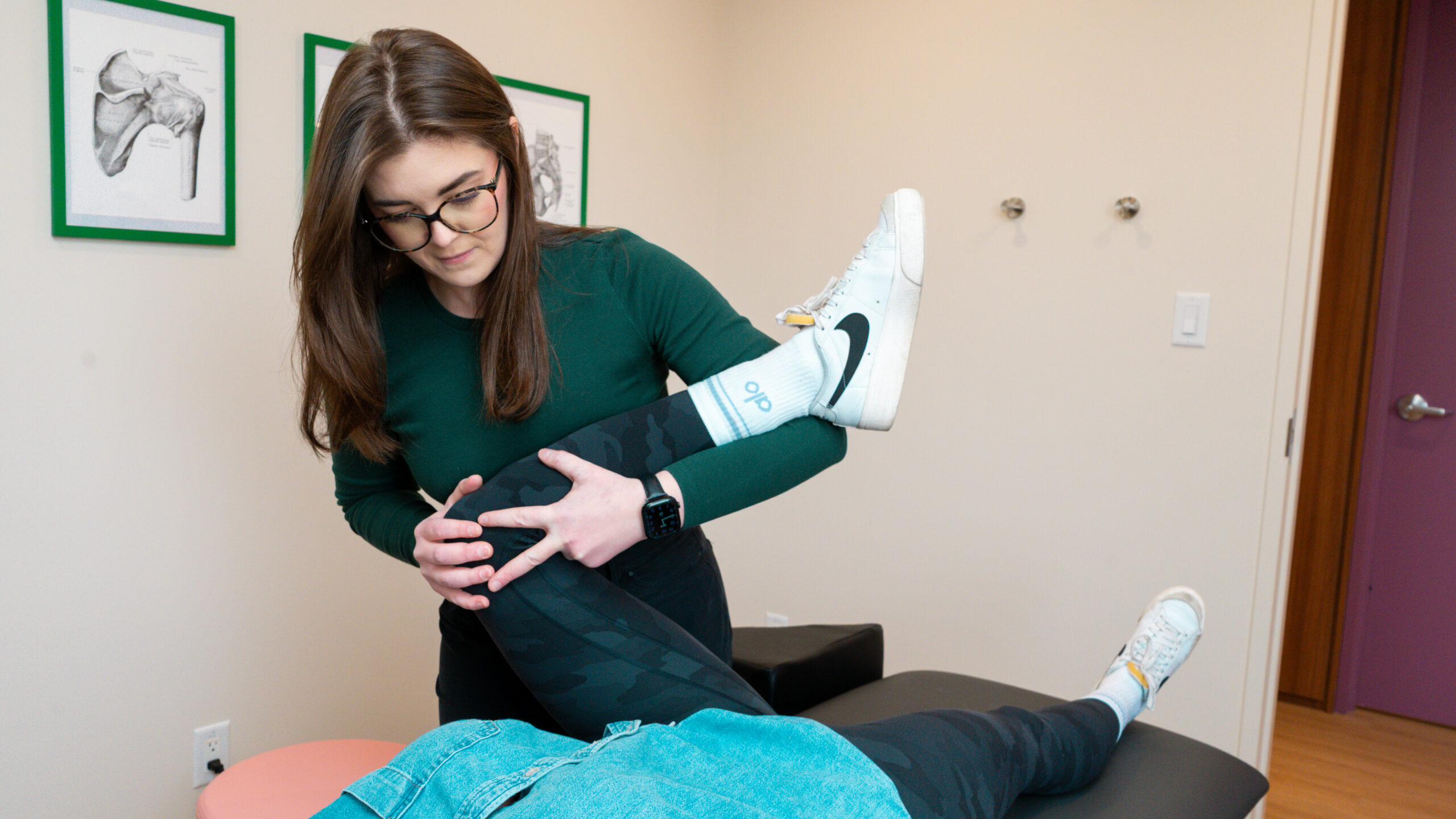
At Coven, treatment starts with a thorough assessment and real education so you understand how your pelvic floor moves and responds to pressure, not just what to do about it.
And yes, we’re going to say it again for the people in the back: it goes way beyond Kegels! In fact, for many people, more Kegels is the opposite of the answer!
Treatment often includes targeted strength and relaxation work, coordination training, and functional movement retraining. Because the pelvic floor works closely with your breath and your whole core system, we look at the full picture, including bladder and bowel habits that might be making things harder.
What You Can Start Doing Today
While working with a pelvic floor physio is the most effective path forward, here are a few things that support pelvic health right now:
- Stop the “just in case” bathroom trips (they train your bladder to panic)
- Practice slow, relaxed diaphragmatic breathing
- Avoid straining during bowel movements
- Exhale during effort and lifting
- Hold off on doing random Kegels until you’ve had a proper assessment. Many people need coordination and relaxation, not more contraction!!
You Don’t Have to Live With Pelvic Floor Problems
Pelvic floor dysfunction is common, treatable, and not something you should have to white-knuckle through. At Coven Health Collective in Calgary, we’re here to help you move, laugh, lift, and live in your body without it being a source of stress.
If any of this sounds familiar, you’re in the right place and we can’t wait to meet you!