
Have you ever leaked a little when you coughed or jumped? Maybe you have felt a persistent heaviness in your pelvis after a long day, or experienced pain with intimacy that you’ve been told to just ignore. Perhaps it is an ongoing low back tension that simply will not settle, no matter how much you stretch.
Pelvic health concerns are far more common than most people realize, yet they remain a topic many hesitate to discuss. Pelvic floor dysfunction is not a life sentence, nor is it a mandatory part of aging or parenthood. It is a treatable condition that deserves professional support.
At Coven Health Collective in Calgary, pelvic floor physiotherapy is about moving beyond the surface symptoms. We focus on restoring the strength, coordination, and confidence you need to move, laugh, lift, and live without worry.
What Is Pelvic Floor Physiotherapy?
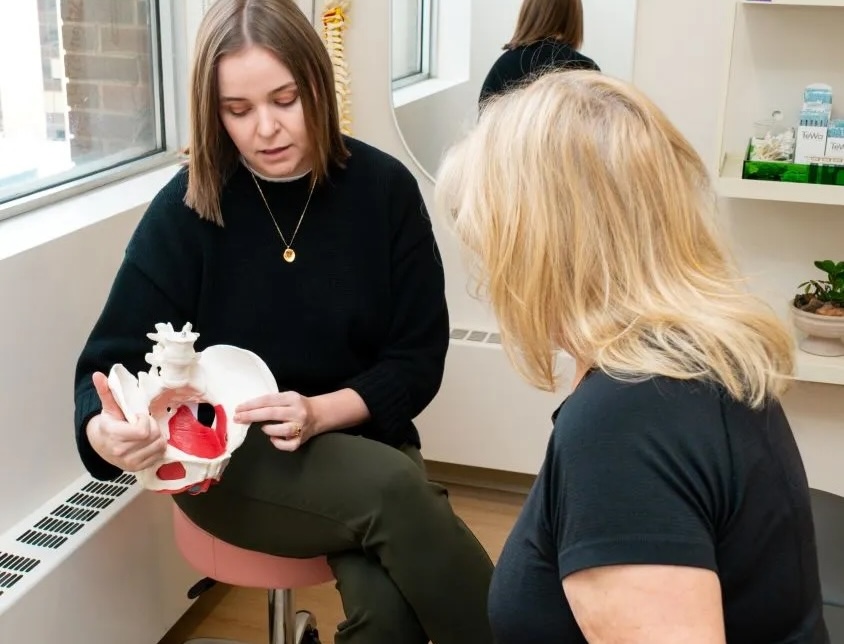
Pelvic floor physiotherapy is a specialized branch of healthcare that assesses and treats the muscles at the base of your pelvis. You can think of these muscles as a supportive hammock that performs several critical roles:
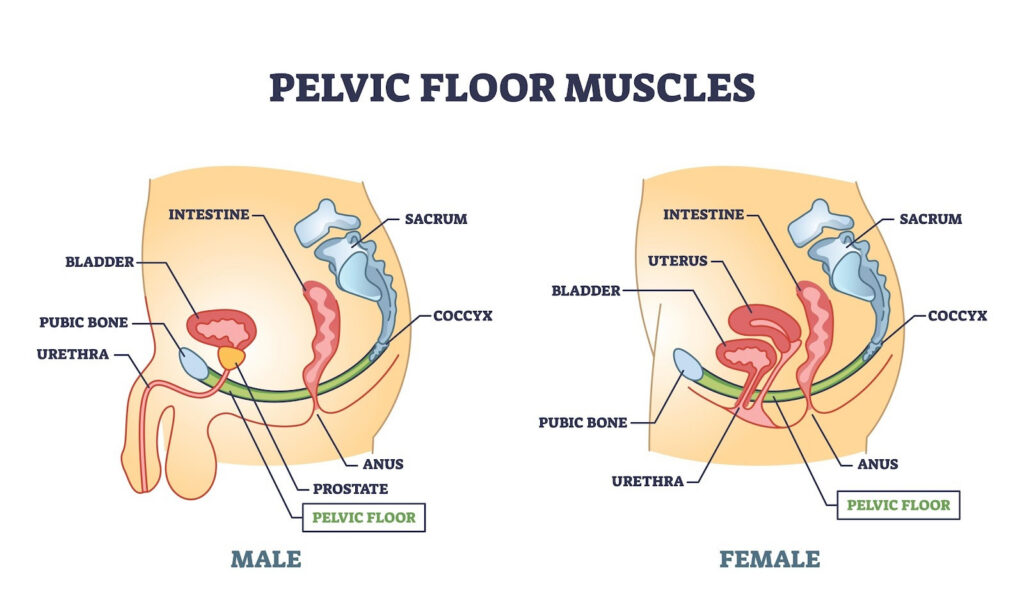
- Organ Support: Holding the bladder, bowel, and reproductive organs in place
- Sphincteric Function: Controlling bladder and bowel movements
- Core Stability: Acting as the foundation for your spine and deep abdominal muscles
- Sexual Function: Contributing to sensation and comfort during intimacy
- Pressure Management: Handling the internal force created when you lift, cough, or exercise
When these muscles are weak, overly tight, or poorly coordinated, it affects your quality of life. Pelvic floor therapy is about more than just Kegels; it is a comprehensive approach to restoring the rhythm and function of your deep core.
Understanding Pelvic Floor Dysfunction
Dysfunction occurs when the pelvic floor muscles are not working in harmony with the rest of your body. This can manifest in several ways:
- The muscles are too weak (underactive)
- The muscles are too tight (overactive)
- They are not coordinating with your breathing
- They are not responding appropriately to changes in internal pressure
Common Conditions Treated
Urinary Incontinence
This includes stress incontinence (leaking when you cough, sneeze, or run) and urge incontinence (a sudden, uncontrollable need to go). While leaking is common after pregnancy or with age, it is never something you have to simply accept. Treatment focus includes:
- Pelvic floor strengthening
- Bladder retraining strategies
- Breathing coordination to manage intra-abdominal pressure
Pelvic Organ Prolapse
Prolapse can create a dragging sensation or a feeling of heaviness and bulging. Physiotherapy addresses this by teaching pelvic floor lifting techniques and core retraining to help you manage the pressure that exacerbates these symptoms.
Pelvic Pain
In many cases, pelvic floor muscles are too tight rather than too weak. If you experience pain during intercourse, tailbone discomfort, or persistent groin tension, strengthening alone is not the solution. Treatment focuses on:
- Relaxation and down-training techniques
- Manual therapy
- Breathing retraining to allow the muscles to lengthen
Prenatal and Postpartum Support
Pregnancy creates significant physical shifts in posture, abdominal pressure, and muscle control. Pelvic floor physiotherapy supports this transition by addressing:
- Low Back and Pelvic Girdle Pain: Managing the shift in your center of gravity
- Diastasis Recti: Helping the abdominal wall recover after birth
- Safe Return to Sport: Providing a roadmap for returning to running or lifting without injury
Pelvic Floor Therapy for Men
Pelvic floor health is not exclusive to any body. Men frequently benefit from treatment for:
- Post-prostate surgery recovery and leakage
- Chronic pelvic pain or “prostatitis-like” symptoms
- Groin tension and sexual dysfunction
- Bowel and bladder control issues
Why It Is About More Than Kegels
A common myth is that pelvic floor therapy means doing endless Kegel exercises. However, if your muscles are already stuck in a tight, shortened state, more clenching will actually worsen your pain and dysfunction.
Effective therapy often prioritizes:
- Relaxation: Learning to let the muscles go before building strength
- Diaphragmatic Breathing: The pelvic floor and the diaphragm should move together like a piston
- Hip and Glute Strength: The hips provide the external support the pelvic floor needs to function
- Pressure Management: Learning how to breathe through a lift or a cough to protect the pelvic floor
The Link to Lower Back Pain
The pelvic floor forms the base of your core. If the base is unstable, the lower back often overworks to compensate. By retraining the pelvic floor alongside the deep abdominals and hip muscles, we can often resolve stubborn back pain that hasn’t responded to traditional spinal treatments.
What to Expect at Coven Health Collective
It is normal to feel a bit nervous about your first pelvic health appointment. Our care is private, respectful, and always guided by your comfort levels.
An assessment typically involves:
- A detailed history: Discussing your symptoms, goals, and daily habits
- Movement Analysis: Checking your posture, core strength, and breathing
- Internal Assessment: An optional, gentle exam to check muscle tone and coordination—this is only done with your full consent
Take the Next Step for Your Pelvic Health
Leaking is not just a part of aging. Pain is not something you have to tolerate. Whether you are preparing for birth, recovering postpartum, or dealing with chronic discomfort, improvement is possible with the right support.
At Coven Health Collective in Calgary, we provide individualized, evidence-based care to help you regain control and move with confidence.
Book an assessment today and help your body function with the support it deserves.